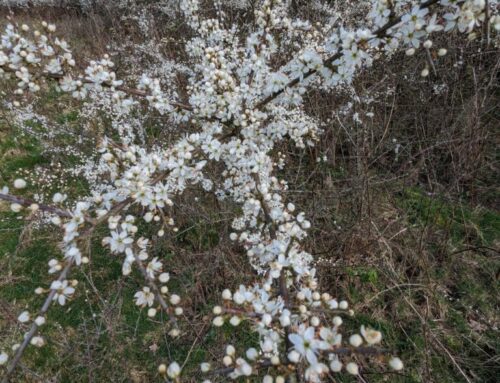

As we head into February, the promise of spring hovers before us. The snowdrops bow their delicate heads. The dark early mornings are punctuated with bursts of bird song. There’s a fresh tang in the air, as if the earth itself is waking up to the possibilities that lie ahead. It might seem early, but if you’re a gardener you can do some jobs now that will make life much easier when spring finally arrives.
Here are our ten early spring gardening tips:
1) Prepare your soil
This is by far the most important job. As winter draws to an end, keep a regular check on your soil. If it’s still too frozen or water-logged, leave it for the time being. To check, pick up a handful of soil and squeeze it – if it goes into a ball, like, clay, it’s still too wet to prep. Its texture should be slightly crumbly.
When your soil is ready, we recommend you apply Sacred Earth’s Biochar Soil Booster. Made to be added to soil, biochar is a special kind of charcoal that’s been baked at a lower temperature than the stuff you put on your barbecue. It is fundamentally different from other soil amendments – like composts, manures and fertilisers. They are used to feed plants for the short-term. Once the plants have taken up all their nutrients, more needs to be applied. And so it goes on, season after season.
In contrast, biochar only needs to be applied once. It isn’t a seasonal burst of nutrition for plants, but a long-term way of improving your soil’s health. It’s not a quick fix, but the key to improving soil quality and the integrity of its subsystem for years to come. Over the ensuing years, you will gradually be able to reduce the amount of composts, manures and fertilisers you add to your soil, because it will be so fertile and nourished they simply won’t be necessary. Buy some here and improve the health of your garden for generations to come. (Please note: for the first couple of years or so, you’ll need to apply a top layer of mulch and/or compost to your soil too.)
2) Clean up
It’s time for a garden spring clean! Clear and scrub any patios, pathways or decking. Clean out your watering can, making sure there’s no fungal growth. We’d recommend using a natural cleaner, like white vinegar, rather than bleach or anything chemical. The last thing you want is to pour the residue of a toxic substance onto your seeds! You can make a powerful, yet natural, cleaner by mixing together equal parts vinegar and bicarbonate of soda, and then diluting with water.
3) Weed
The earlier you get rid of weeds, the better. As the temperature rises, perennial weeds will start to wake up and annual weeds will start to germinate. The sooner you pull them up, the less time they’ll have to grow and multiply. Remember to check your paths and patios, as well as your borders and lawns. Hand weeding is best, as it disturbs the soil the least. The more the soil is turned over, the greater the chance all those dormant weed seeds inside it will germinate and grow. Obviously, you might need to use a hoe with some of the more stubborn roots, like dandelions.
4) Sow seeds that need a longer season
February is the time to get planting those flowers, fruit and veg that have a longer growing season. These include begonias, geraniums and snapdragons. Hardy broad beans can be planted outside, as well as Jerusalem artichokes and raspberry canes (provided the soil isn’t frozen or water-logged). You can also start growing brassicas under cover, like cabbage, cauliflower and Brussel sprouts. Indoors, or in a heated greenhouse, now’s the time to plant peppers, chillies and aubergines for a summer crop.
5) Order summer flowering bulbs and seeds
In gardening it always pays to be organised. Now’s the time to plan your summer beds. Dream up your heady, colourful displays and order in the requisite bulbs and seeds of flowering beauties like lilies, gladiolus and ranunculus. There’s nothing quite like leafing through a catalogue (or scrolling through a website) full of brightly coloured summer blooms on a cold, dark evening.
6) Hunt down pests
Just like weeds, the sooner you track down pests the better. Just as we don’t believe in chemical weed killers, at Sacred Earth we don’t use chemical pesticides either. If you go on the hunt for slugs, snails, weevils and aphid colonies now, you might even catch them while they’re still hibernating. In your compost heap, look out for the white vine weevil larvae, which loves compost and feeds on plant roots.
To really keep pests under control, you want to encourage the greatest possible diversity of insect and arachnid life. The presence of pest-eating predators – like ladybirds, earwigs, hoverfly larvae, lacewing larvae, dragonflies, beetles and spiders – will keep your garden ecosystem balanced. To encourage these helpful friends, avoid all chemical pesticides, plant a wide variety of nectar and pollen sources that provide food for them throughout the year, create a variety of habitats with the presence of trees and shrubs and make sure to have as many native plants as possible – as those’ll be the ones home to indigenous insect life. Finally, don’t be too tidy and avoid patches of bare earth. Insects and spiders won’t expose themselves to bird predators by venturing out in the open. You can also build an insect ‘city’ from old plant pots, bricks and pallets. If you’ve less room, there are insect houses available to buy online and in gardening centres. Make sure to provide water sources in and around any insect accommodation.
7) Install a water butt
Tap water is slightly too alkaline for some plants. Catch the late winter and early spring rain in a butt to water your newly sown seeds. House plants will also prefer rain water to tap water. Position your butt under a down pipe, to make the most of any rainfall.
8) Clean out your greenhouse
Before you fill your greenhouse with trays of seedlings and cuttings, give it a good clean. Remove all algae and moss. Sweep out the floor. To get rid of any hibernating pests, wipe down the glass panes, and surfaces with a natural disinfectant, like vinegar or fruit-based citrox. Avoid bleach or chemical cleaners, because these will also kill off the insect and spider predators you want to encourage.
9) Prune and trim foliage
Have a general tidy up. Dead head your hydrangeas. Trim trees and shrubs. Cut back the overgrowth of deciduous grasses and herbaceous perennials. But don’t cut them down to the roots. Leave enough cover for wildlife.
10) Fix and paint fences
While many shrubs and trees are bare of foliage and trimmed right back, it’s the ideal time to fix any broken fences and paint or varnish them. Just make sure you wait until there’s a dry day!