
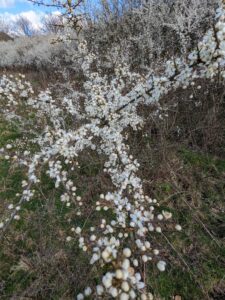
Prunus spinosa
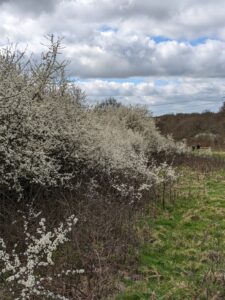
As you travel along the hedgerows, highways and byways at this time of year, you can’t miss the frothy white blossom of the Blackthorn against the bare branches of other trees and shrubs. Here at Sacred Earth, in East Sussex, we are blessed with an abundance of it.
It’s thick bushy nature and long fierce thorns provides great cover for nesting birds, early pollen and nectar for bees and refuge for small mammals. Along it’s base you can see many tunnels made by rabbits and badgers, safe from man and beast. It’s leaves are favoured by many species of moth caterpillar and of course the birds love the berries as well as the caterpillars.
The white parade begins with snowdrop then wood anemone and the Blackthorn will be replaced by the frills of Hawthorn. Cow Parsley, Hemlock and many other umbellifers will brighten our verges as spring moves into summer.
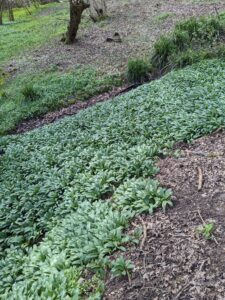
At this time of year Three-cornered Leek and wild garlic are in full leaf and ready to pick and their white flowers taste amazing sprinkled over salads. The strongly flavoured leaves are great in salads and soups and wonderful whizzed up into a pesto.
Back to Blackthorn….it’s black berries are used to make the wonderful winter warmer Sloe Gin. Traditionally you would gather the berries after the first frosts and prick them with the long thorns. Now you can beat the birds and just pop them in the freezer! They really don’t taste very nice but are good for the digestive system.
The hard-wearing wood is used to make characterful knobbly walking sticks and witches are said to have made their wands and staffs with it. It burns well so very good for making fires.
It’s worth getting bundled up against the wind and rain and getting out to enjoy this brief show of white froth – I promise!
An Elder, Sacred Earth