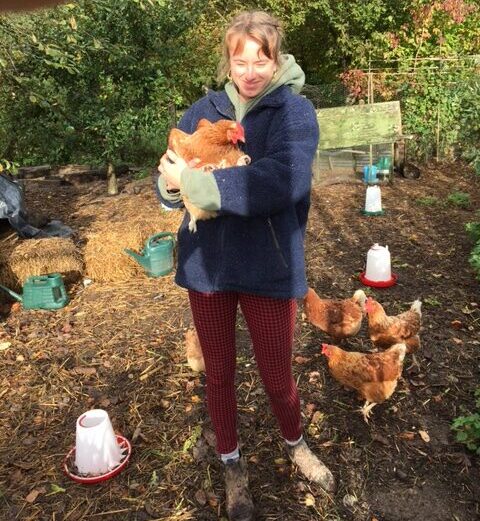

Planting the first runner beans on the plot
It’s been a journey….
Blistering heat kissing the brown skin of my neck, rough, soil coated fingers, bare feet amongst the clover, animal tracks that weren’t there yesterday and morning dew on white tipped meadow grass. My first seven months at Sacred Earth, helping to create its first permaculture no dig food growing project, are a kaleidoscope of memories and experiences.
A lonely jackdaw cawing from the top of a great oak, the sound of children’s laughter as they splash in the lake, a bitter blackberry, a sweet blackberry. I developed a deep connection to the changing seasons.
Colder months, bared teeth, frozen ground, the chilling wind flapping the polytunnel door. Stillness, silence, being alone, being together. Connection, deep appreciation for nature, homecooked meals from homegrown veg. Above all, a gentle healing in both myself and the land around me, as we tend one another.
How I came to Sacred Earth
After studying for my BSc in Geography I enrolled on an MSc in Food Sustainability and Natural Resources at the Centre for Alternative Technology in Wales. It was here I met Ffion Thomas, a fellow student who would later start a project on Ash Dieback at Sacred Earth as part of her PhD. During the second lockdown she suggested I come to Sacred Earth as there was an opportunity to learn about permaculture no-dig food growing, living and working onsite as a volunteer. So I gave up everything I’d known and moved further south than I had ever travelled.
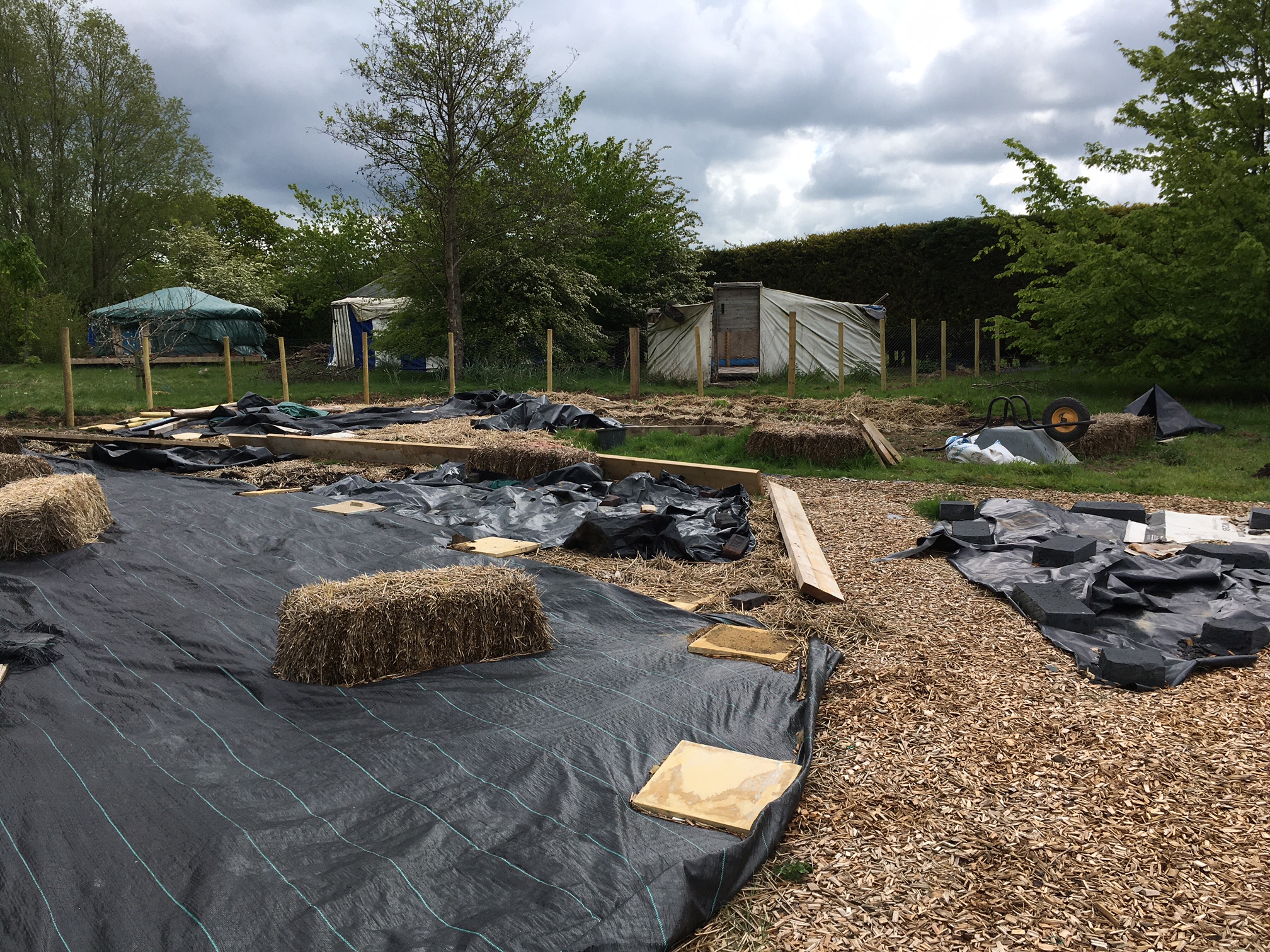
The first few weeks at Sacred Earth were some of the hottest I’d experienced in the UK! I came during the heatwave in June 2021 and worked most days very early in the morning to avoid the midday sun. Along with three other volunteers, we prepared the ground for late planting which included creating new beds, raised planters and working out a general planting plan for the summer.
The challenges of creating a no-dig food growing project from scratch
The work to begin cultivating was particularly difficult because of the heat and my general lack of experience. I had worked on various projects in plots that were already established but I’d never started my own food garden before, and as a result the disappointment I felt when things went wrong was really demotivating and heart breaking. We had a rabbit invasion during the first few weeks, which mullered pretty much all the brassicas we planted – as a result we had to put planting on hold whilst we fixed the boundary fence.
The garden needed constant attention, not least because we hadn’t a hose at the time and the days were really dry. There were pests galore, including prolific rabbit, caterpillar and slug infestations, all of which I had never worked with before. But I’ve come to realise that this comes hand in hand with cultivating the land in a permaculture, no-dig way. There is a lot of experimentation involved, and over time I’ve come to learn that working with the land means immersing yourself completely in your surrounding environment, tending to it, loving it.
In the words of Masanobu Fukuoka, one of the gurus of natural farming, ‘once we become attuned and connected to an environment, we will be able to intuitively live sustainably.’ In other words, rather than observing a landscape, we have to live within it to understand it.
Building a connection with the land
This is a concept I’ve really learned to develop at Sacred Earth: once I started viewing the land as an extension of myself, and visa versa, things came naturally and I realised that all the theoretical and academic knowledge in the world couldn’t prepare me in the same way that instinct could. The generations of knowledge hidden within me from my own ancestors were unlocked and finding a way out.
One of the main things I have realised so far on this journey is how much more I notice beautiful things in nature, whether it be the wizened, silver birch bark in the forest, the tiny tongue of a red admiral butterfly, or the subtle buzz of a bumblebee on a nasturtium flower. Working with nature, giving it love (which it then reflects back to me) is one of the most rewarding things.
One of our team morning practices is to share something that we’re grateful for. I can find it difficult to pinpoint my appreciation, especially if I’m not feeling great or I’ve had a bad day. But reflecting on my experience so far, I feel lit up when I talk about nature and gardening and I am so grateful that I can do something every day, as a job, that I actually love. It is rare to be in such a position and I wish every person could experience it, because the benefits are priceless.
Over the next few series of posts, I look forward to describing more about what it means to be a garden intern at Sacred Earth: the highs, the lows, the in-betweens, all of which have honed my knowledge and life in a way that I will be eternally grateful for.
By Fenella Walsh