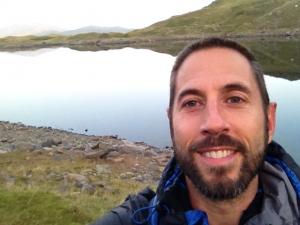
 Jim Gibson is a volunteer at Sacred Earth. His experience and expertise at working with young men is going to be instrumental to the success of our Touchstones project.
My name is Jim Gibson. I am a teacher, a therapist, a rites-of-passage guide, a mentor to young men in the criminal justice system and in my local community, a father and a boxing coach. I considered becoming a Buddhist monk in my twenties, have been twice lost in the wilderness, and have almost died three times. All of which has led me to be an agent for the change I know is possible in these troubled times.
I have worked extensively with young men. I’ve taught in further education and I’m a mentor for A Band of Brothers, as well as in my community, so I have an intimate understanding of what it is to be a young man in the world today.
And the truth is they are being failed at every turn. They grow up in a culture that perceives them as a menace or an inconvenience, or at best, needing them to live a life that offers them little in the way of fulfilling, purposeful vocations or empowering role models. It is not a coincidence that the biggest killer of men under 45 is suicide.
The simple fact is that more often than not we abandon our young men. More specifically, it is our menfolk and elders who abandon their younger counterparts. In 2013 one million (10 per cent of) fathers did not live with their children, and only 49 per cent of those had regular contact. The young men I have worked with who grew up without fathers, have without exception suffered from that absence. While other factors affect the outcome (such as abuse, impoverishment, lack of other positive caregivers, etc) not having a Dad to learn from about being man is something that sets a young man up for a life of failure.
A Band of Brothers is an organisation which mentors young men who have been involved in the criminal justice system. The key to its success is in the approach: as mentors and men in the community, we do not do what most adults do in our society. We don’t try to fix or rescue them, we don’t advise them (unless asked) and we don’t project our fears and issues onto them. Instead, we listen, with every part of our being. We acknowledge what they are doing well, how they’ve changed, and we honour their good qualities.
We show them what healthy masculinity looks like. It’s okay to show vulnerability, to feel sadness, to cry. Anger is a normal, healthy emotion. We must grieve if we are to know how to love. Men can play and have fun – indeed they must, if they are to have health and fulfilling lives.
The results have been exceptional. Eighty five per cent of men who complete the program have no further contact with the criminal justice system. And nearly all of them report significant positive changes in most aspects of their lives: from better relationships to regular employment, improved mental health, and a higher sense of their own self-worth. Everyone around them also benefits from this.
Sacred Earth is planning a new project which will bring young men and women together with a group of older people (or elders, as we call them) on the land. Touchstones is, for me, that natural evolution of programmes like A Band of Brothers. It will provide the type of mentoring that is so sorely lacking in our culture.