Child development and ‘culture’
One of the key things I’ve learned through my education work is that culture has a key influence on child development.
By ‘culture’ I mean the environment surrounding the child. If a culture values collaboration, support, learning and growth it enables people to discover their gifts and to bring them to the world. This is very different to our current culture, which is based on competition, individualisation and fear of scarcity.
When you twin this current mainstream narrative with the fact that children have so little time to play and explore the outdoors, you get a growing epidemic of Nature Deficit Disorder (a term coined by Richard Louv in Last Child in the Woods).
It’s all about connection
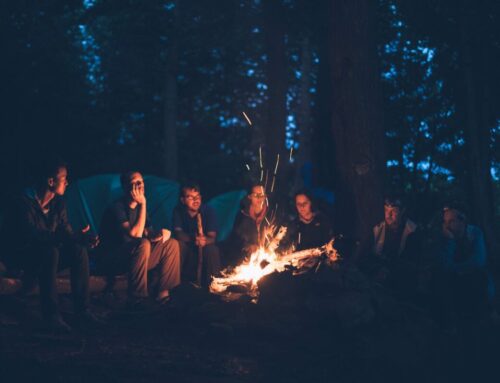
At Sacred Earth we are trying to combat this by cultivating connection. We approach this at three levels:
- connection with ourselves
- connection with each other
- connection with the natural world.
Natural by design
When I wrote my dissertation a decade ago I discovered that growing up separate from nature also influences three key areas of child development:
- psychological
- physiological
- and social.
At this point I knew innately that being in nature was good for me, but I didn’t realise how much effect it has on us. If we’re stressed or unhappy, just looking at a tree can make us feel better.
Our species evolved for millions of years immersed in natural environments. We are designed to be part of nature. So if we spend the majority of our time stuck indoors, we are deprived of a whole area of sensory stimulus that we would have naturally received – birdsong, feeling the wind on your skin, seeing the sun’s trajectory through the sky. This stimulus is particularly important for children, who are soaking everything up like sponges.
Young people who spend all of their time indoors are also deprived of the ability to play in the real world. They don’t have the chance to test the boundaries, get lost, feel afraid, have adventures or sense the aliveness that they share with other creatures.
Sacred Earth’s approach
One of the best things about working at Sacred Earth has been witnessing key stages of child development. Planting trees together is a great activity to build this around because you see the tree growing alongside the child. It gives you place to which you can both return, a way of marking the passing of time and everything that goes along with it.
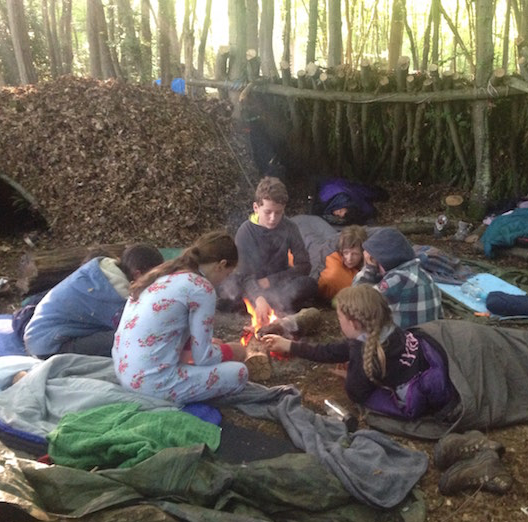
During the Earth Steward Apprenticeship we teach a whole range of survival skills, like foraging, whittling and fire making. But what’s really magical is that we’re also teaching ‘hidden’ survival skills. We foster a culture of support and collaboration and I’ve heard time and time again that teenagers really value this. They’re not judged, they’re not pressurised and they feel that they can truly be themselves. Having this space enables them to find their place in the world – and discover their own unique gifts.
Read more about the Earth Steward Apprenticeship here.
By Victoria Mew, nature connection facilitator and member of the Sacred Earth leadership team.